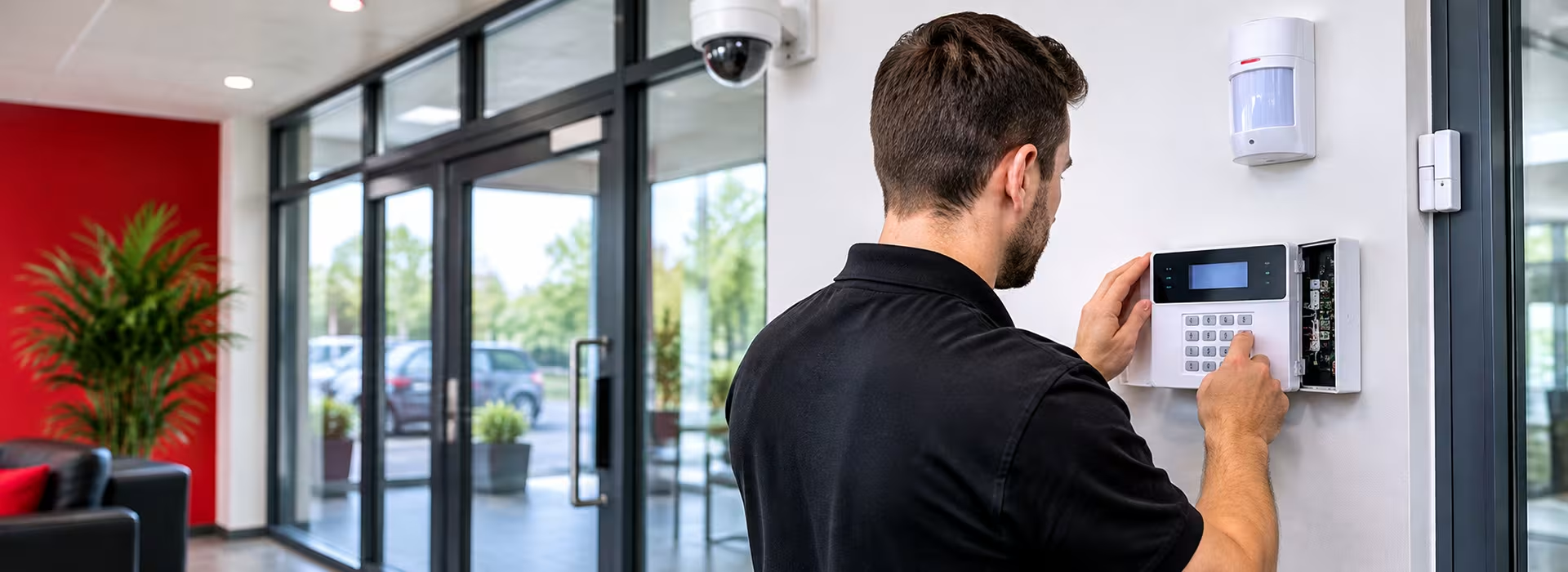
Choosing an intruder alarm for a business used to mean picking a bell box and a keypad. Today the decision is more technical. Insurers specify a minimum intruder alarm grade, police response depends on how the system is installed and monitored, and getting it wrong can mean higher premiums, a disputed claim or no police attendance when you need it most.
This guide explains what intruder alarm grades mean, how Grade 2 and Grade 3 differ, what insurers typically expect, and how police response and URNs work, so you can brief an installer with confidence. It is written for businesses, landlords and property managers in Worcestershire and across the UK.
Quick answer: Intruder alarm grades (1 to 4, set out in BS EN 50131) describe how much knowledge and equipment an intruder is expected to have, and therefore how resistant the system must be. Many insurers want at least Grade 2 for lower-risk business premises, and Grade 3 is commonly specified for higher-risk commercial sites. Police response is a separate matter: it needs a professionally monitored system, installed and maintained by an inspectorate-certified company, and a Unique Reference Number (URN). Always check your insurance policy wording before you choose.
What Are Intruder Alarm Grades?
Intruder alarm systems in the UK are graded under the European standard BS EN 50131, applied in the UK alongside PD 6662. The grade (1 to 4) is based on the type of intruder the system is designed to withstand. The higher the grade, the more capable the intruder the system is built to resist.
| Grade | Intruder assumed | Typical use |
|---|---|---|
| Grade 1 | Little knowledge of alarm systems and a limited range of simple tools | Very low-risk premises. Insurers rarely accept it for business use |
| Grade 2 | Some knowledge of alarm systems and a general range of tools and portable instruments | Lower-risk homes and small or lower-risk commercial premises. Often the minimum insurers accept |
| Grade 3 | Familiar with alarm systems and a comprehensive range of tools and portable electronic equipment | Higher-risk homes and most commercial premises, especially where there is stock, cash or valuable equipment |
| Grade 4 | Able to plan an intrusion in detail, with a full range of equipment | High-security sites. Rarely required, and little equipment on the market meets it |
The grade applies to the whole system, including the control panel, detectors, sounders, tamper protection, power supply and the way signals are sent out, not to a single component.
Grade 2 vs Grade 3: What Is the Practical Difference?
A Grade 3 system is designed to resist a more capable intruder, so its requirements are tougher across the board. One of the clearest practical differences is that, on a Grade 3 system, movement detectors must report any attempt to block or cover them (known as masking) to the user when the system is being set. Grade 3 equipment also has more demanding requirements for tamper protection, power supplies and communications, and it usually costs more to supply and install.
In simple terms:
- Grade 2 can be suitable for lower-risk premises where your insurer confirms it is acceptable.
- Grade 3 is the safer specification for most commercial premises, and is commonly specified where there is valuable stock, cash, a history of break-ins or a remote location.
Grade 1 is generally not considered adequate for business insurance purposes, and Grade 4 is rarely needed outside high-security sites.
Which Intruder Alarm Grade Does Your Business Need?
There is no single answer for every building. The right grade depends on a combination of factors:
- Your insurer’s requirement. This is the most important factor. Your policy schedule or insurer’s survey may state a minimum grade or require a particular type of monitoring.
- What is on site. Stock, cash, tools, IT equipment and other attractive items raise the risk.
- Location and history. Remote units, industrial estates and premises that have been targeted before generally need more protection.
- Type and layout of the building. Multiple entrances, roof lights, shutters and shared access all affect detector choice and coverage.
- Whether you want police response. Systems that qualify for police response must meet specific standards (see below).
Before you commit, ask your insurer or broker to confirm the requirement in writing. A system that does not meet your policy conditions can put a claim at risk, and over-specifying wastes budget.
What Do Insurers Usually Expect?
Requirements vary between insurers, but business policies commonly ask for some or all of the following:
- A minimum alarm grade, often Grade 2 or Grade 3 depending on the risk
- Installation and maintenance by a company certified by an inspectorate such as SSAIB or NSI
- A monitored system for higher-risk premises, sometimes with a URN
- Regular servicing and maintenance, with records kept
- The alarm being set whenever the premises are unoccupied
- Named keyholders who can attend promptly
Keep your installation certificate, commissioning paperwork and maintenance records together, because insurers may ask to see them after a loss. Some policies also make cover conditional on the alarm being set when the premises are empty, so a burglary on a night when it was left unset could lead to a declined claim. Read the conditions carefully.
Audible-Only, Keyholder Response or Police Response?
There are three broad types of intruder alarm, and the one you choose affects both cost and insurance:
- Audible-only (bells-only): The alarm sounds locally but does not send a signal anywhere. It relies on someone nearby hearing and acting. It offers the least protection and is often not enough for business insurance.
- Monitored with keyholder response: The alarm sends a signal to an alarm receiving centre (ARC), which contacts your nominated keyholders.
- Monitored with police response: The ARC can request police attendance for a confirmed alarm. This needs a URN and a system that meets police requirements.
How Police Response and URNs Work
In England and Wales, police normally respond to confirmed intruder alarms only on systems that have been issued a Unique Reference Number (URN). The detail is set by police policy (the National Police Chiefs’ Council requirements) and can change, so always check current rules with your installer. The main points are:
- Professional monitoring. The system must be connected to an ARC that is listed by an inspectorate such as NSI or SSAIB.
- A certified installer. The company installing and maintaining the system must also be inspectorate-listed. A URN is difficult or impossible to obtain through an unlisted installer.
- Meeting the standards. Newly installed systems must conform to PD 6662 and BS 8243 to qualify for police response.
- Confirmation. Police generally respond to a confirmed alarm, such as more than one detector activating or another form of verification, rather than a single trigger.
- Maintenance. Police-response systems typically need a maintenance contract with regular inspections, commonly twice a year.
- The URN itself. Once the ARC decides police attendance is justified, it quotes the URN to the police control room to request a response.
Response levels and false alarms
Police response is usually described in levels. Level 1 means a response (subject to priorities and demand), and Level 3 means police response has been withdrawn. A system can be downgraded from Level 1 to Level 3 after repeated false calls, typically three in a rolling twelve months. Losing police response can also affect your insurance, which is why preventing false alarms matters so much.
These rules apply to England and Wales. Police Scotland and other forces have their own policies, so check the position for your location.
How to Prevent False Alarms
False alarms waste time, cost money and can put police response and insurance at risk. The most common causes are avoidable:
- Train everyone who sets and unsets the alarm, including cleaners, contractors and new staff
- Make sure set and unset procedures are simple and followed every time
- Choose the right detectors for the environment, especially where there are pets, heaters, sunlight, moving stock or draughts
- Keep batteries, power supplies and sensors in good condition
- Investigate every false alarm and record the cause and the fix
- Service the system regularly, so developing faults are caught early
Servicing and Maintenance
An intruder alarm is only as reliable as its last service. Insurers commonly expect regular maintenance, often at least annually, and systems with police response typically need regular inspections as part of a maintenance contract. Check your own insurer and installer requirements.
A good service includes testing the detectors, sounders, tamper circuits and batteries, checking communications to the ARC where fitted, and reviewing any faults or false alarm history. See our intruder alarm servicing and maintenance services for details.
How Your Alarm Signals: Why the PSTN Switch-Off Matters
For a monitored system, how the alarm contacts the ARC is as important as the alarm itself. Older systems often relied on analogue phone lines, and the UK is retiring that network, with the switch-off planned for January 2027. Many modern systems use internet (IP) and mobile signalling, sometimes with more than one path, so a single failure does not cut the connection.
If your alarm is monitored and has not been upgraded in recent years, ask your installer now whether its signalling will still work after the switch-off, rather than waiting until the deadline.
Combining Your Alarm with CCTV and Access Control
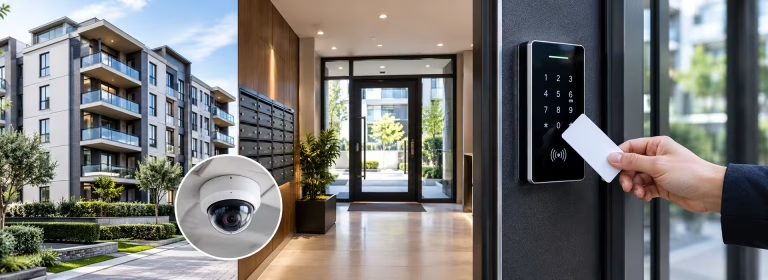
Where the equipment is compatible, an intruder alarm can work alongside CCTV and access control as part of a wider security system. This can help with alarm verification, give you a visual record of an incident and control who can enter and leave the building. Read more about our CCTV systems and access control installation.
Common Intruder Alarm Mistakes
- Choosing a grade without checking the insurer’s requirement
- Buying an alarm from a company that is not inspectorate-certified, then finding it cannot support a URN
- Leaving the alarm unset at night or at weekends
- Not training all staff and cleaners on set and unset procedures
- Ignoring false alarms until police response is withdrawn
- Missing servicing visits, or losing the paperwork
- Relying on outdated phone-line signalling
- Out-of-date keyholder details
Checklist Before You Buy or Upgrade an Intruder Alarm
- Check your insurance policy and ask your insurer or broker what grade, monitoring and installer certification they require.
- Decide the level of response you need: audible-only, keyholder response or police response.
- Choose an inspectorate-certified installer such as an SSAIB or NSI company.
- Ask for a site survey and a written specification showing the grade, detectors, signalling and monitoring.
- Check how the alarm will signal and confirm it will remain compatible after the PSTN switch-off.
- Agree a maintenance contract and keep every certificate and service record.
- Nominate reliable keyholders and keep their details current.
Frequently Asked Questions
What grade intruder alarm does my business need?
It depends on your insurer, your premises and what you keep on site. Many insurers accept Grade 2 for lower-risk business premises, and Grade 3 is commonly specified for higher-risk commercial sites. Ask your insurer to confirm the requirement in writing before you choose.
Is a Grade 3 alarm required for business insurance?
Not always, but it is commonly specified for higher-risk premises. Some insurers will accept Grade 2 for lower-risk sites, so the answer is in your policy wording or the insurer’s survey.
What is the difference between Grade 2 and Grade 3?
Grade 3 is designed to resist a more capable intruder, with tougher requirements across the system. One practical difference is that Grade 3 movement detectors must report masking when the system is set. Grade 3 systems generally cost more.
What is a police URN?
A Unique Reference Number (URN) is issued for a monitored intruder alarm that meets police requirements. It allows the alarm receiving centre to request police attendance for a confirmed alarm. It must be obtained through an inspectorate-certified installer and monitoring centre.
Will the police attend any alarm?
No. In England and Wales, police normally respond only to confirmed alarms from systems that hold a URN. Repeated false calls can lead to police response being withdrawn.
Does a monitored alarm cost more?
Yes, monitoring normally involves an ongoing fee in addition to the installation cost, as well as a maintenance contract if you want police response. Ask your installer for a clear breakdown.
How often should an intruder alarm be serviced?
Many insurers expect servicing at least annually, and police-response systems typically need regular inspections under a maintenance contract, commonly twice a year. Check your own insurer and installer requirements.
Can I upgrade a Grade 2 alarm to Grade 3?
It depends on the equipment. Grade is a property of the whole system, so an upgrade often means changing some components rather than just adding to what is there. An engineer should assess the existing system first.
Can an intruder alarm be linked to CCTV?
Where the equipment is compatible, yes. Linking an alarm with CCTV can help with verifying alarms and reviewing incidents. An installer can advise on what is possible with your existing system.
Intruder Alarm Installation, Servicing and Takeovers in Worcestershire
Fire & Theft Protection UK is a family-run, SSAIB-certified security contractor providing intruder alarm installation, wireless and monitored alarm systems, servicing, maintenance, upgrades and takeovers of existing systems for commercial and residential properties across Worcester, Redditch, Bromsgrove, Kidderminster, Droitwich and surrounding areas. Our security systems are fitted by DBS checked staff.
If you are not sure which grade or level of response your business needs, or you want an existing alarm checked, we can survey your premises and talk you through the options.
Call: 0800 0016 482 · Email: info@fireandtheftprotectionuk.co.uk
Want to talk it through first? Contact our team.
Further Reading
Note: This article provides general information about intruder alarms in the UK and is not a substitute for advice from your insurer or a site survey by a competent security contractor. Insurance and police requirements change, so always check the current rules for your premises and location.