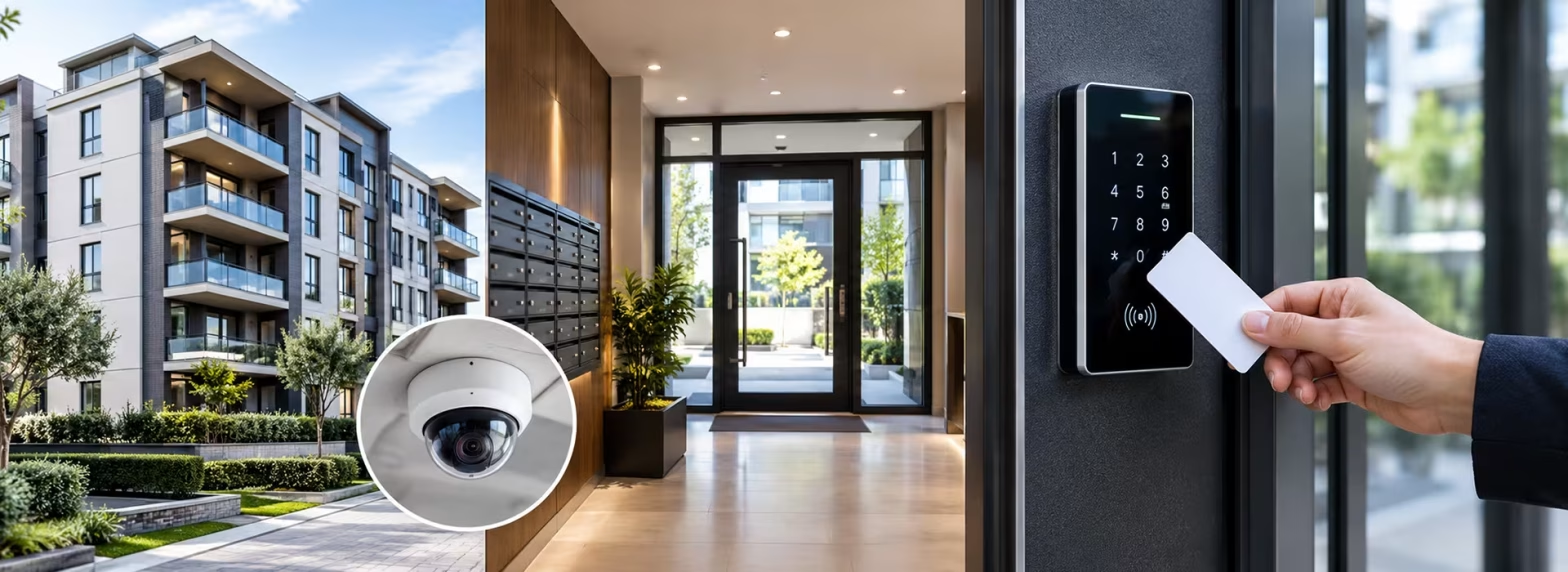
Access control helps keep apartment blocks and managed buildings secure. It controls who can enter communal areas and makes access easier for residents, visitors and contractors.
Property managers can choose from key fobs, access cards, video intercoms and mobile entry systems. Each option offers different benefits. The right choice depends on the building, its residents and its security needs.
In this guide, we explain how access control works, which systems are available and what to consider before installing or upgrading one.
What Is Access Control?
Access control is a system that manages entry to a building or a restricted area. Instead of relying only on traditional keys, residents can use electronic credentials to unlock doors.
For apartment blocks, access control can protect several areas, including:
- Main and rear entrance doors.
- Car parks and vehicle gates.
- Bin stores and cycle storage areas.
- Plant rooms and service areas.
- Gyms and other communal facilities.
- Areas reserved for staff and contractors.
A well-designed system gives authorised people convenient access. At the same time, it helps prevent unwanted entry.
Why Do Apartment Blocks Need Access Control?
Managed buildings have many different users. Residents, visitors, delivery drivers and contractors may all need access. Therefore, property managers need a reliable way to control entry.
Improve Building Security
Access control helps restrict entry to authorised users. Some systems also record when a credential is used and which door it opens.
This can help managers review access events when a security concern arises. It is especially useful in buildings with several entrances or shared facilities.
Make Entry Easier for Residents
Residents need a simple and reliable way to enter their building. Key fobs, access cards and mobile credentials can make everyday entry more convenient.
However, the system should suit the people who use it. Property managers should consider accessibility and provide practical alternatives where needed.
Manage Visitors and Deliveries
Visitors and delivery drivers often need access to apartment buildings. An audio or video intercom lets residents speak to visitors before allowing them inside.
Some systems also support temporary access for approved contractors. This can make planned maintenance visits easier to manage.
Reduce Problems With Lost Keys
Lost keys can create security concerns. Electronic access systems offer a practical alternative because administrators can often cancel individual fobs or cards.
As a result, managers may not need to replace the main entrance lock every time a credential goes missing. The exact options depend on the system installed.
Simplify Property Management
Electronic systems can make it easier to manage residents’ access permissions. Authorised staff can add users, remove old credentials and update permissions where the system supports these features.
This is particularly helpful for managing agents who look after several buildings. However, clear procedures are still needed to keep access records up to date.
Types of Access Control Systems
There are several ways to control access to an apartment block. Each system has different features, so compare the options before making a decision.
Key Fob and Access Card Systems
Residents use a programmed fob or card to open a controlled entrance. These systems are popular because they are simple to use.
Key benefits include:
- Quick access for residents.
- Easy cancellation of lost credentials on supported systems.
- Convenient management for buildings with many flats.
- Different access permissions where supported.
Before choosing a system, ask how new fobs are issued and who can manage them. You should also check how quickly a lost fob can be cancelled.
Video and Audio Intercoms
An intercom allows visitors to contact a resident before entering the building. Video models also show the visitor on a screen, where this feature is available.
Consider the number of flats, the entrance layout and the quality of the audio or video. Accessibility and ongoing maintenance are important too.
Keypad Entry Systems
A keypad grants access when a user enters the correct PIN. It can be useful for selected entrances or restricted areas.
However, shared codes can spread beyond authorised users. Managers may need to change a code if it becomes widely known. Individual credentials can offer better control in some buildings.
Mobile Access Systems
Some systems allow residents to use a smartphone to enter the building. Depending on the equipment, access may work through Bluetooth, NFC or a mobile application.
Mobile entry can make access management more convenient. However, managers should consider residents without compatible phones and provide a suitable alternative.
Integrated Access Control
An integrated system can connect access readers, electronic locks, intercoms and gates. In some buildings, it can also work with compatible CCTV equipment.
Before combining different systems, check their compatibility. You should also consider fire safety, cybersecurity and future maintenance.
7 Things to Consider Before Installation
Choosing the right access control system starts with understanding the building. Consider these seven points before selecting equipment or planning an upgrade.
1. Assess the Building
Start with a site survey. This helps identify the entrances, existing locks and areas that need protection.
The survey should cover:
- The number of flats and regular users.
- Main entrances and secondary access points.
- Visitor and delivery arrangements.
- Existing doors, locks and intercoms.
- Car parks and communal facilities.
- Restricted areas and current security concerns.
This assessment helps you choose suitable equipment. It can also prevent unnecessary spending on features the building does not need.
2. Consider Residents and Visitors
A secure system should also be easy to use. Residents need convenient entry, while visitors need a clear way to contact the right person.
Consider older residents and people with disabilities. Make sure the controls are accessible and that alternative entry arrangements are available where needed.
3. Protect Fire Safety and Escape Routes
Access control must never prevent safe evacuation.
Electronic locks need careful planning when they are fitted to communal doors. This is especially important when a door forms part of an escape route or provides fire resistance.
The correct locking and release arrangements depend on the door and the building’s fire strategy. Some installations may require emergency release devices or suitable integration with fire alarm systems.
Do not assume that every lock should respond in the same way during a power failure or fire alarm. A competent professional should assess the specific door and its safety requirements.
For more information, read the UK Government’s guide to fire safety in small blocks of flats.
4. Manage Access Permissions
Property managers need a clear process for issuing and cancelling access credentials. For example, a departing resident’s fob should be cancelled promptly when their permission ends.
Similarly, contractor access should be limited to the areas and times required. Assign responsibility for managing permissions so that access records stay up to date.
5. Protect Personal Data
Some systems record when a person uses a credential and which door they enter. Video intercoms and connected CCTV may also capture personal information.
Managers should know what information the system collects, why it is needed and who can view it. They should also protect records from unauthorised access and set appropriate retention periods.
Where personal data is involved, check the relevant UK data protection requirements. The Information Commissioner’s Office guidance on CCTV and video surveillance is useful when the system includes cameras.
6. Check Existing Doors and Equipment
A new access control system may need to work with existing locks, door closers, intercoms and gates. Check compatibility before choosing the equipment.
Fire doors need particular care. The installation must not compromise their intended function or the safe use of an escape route.
A site survey can help establish which parts can remain and which need upgrading or replacing.
7. Plan for Maintenance
Regular maintenance helps keep an access control system reliable. Checks may cover readers, locks, intercoms, door closers, power supplies and software updates.
Report faults promptly, especially when they affect the main entrance or an emergency exit. You should also check that replacement parts and technical support will remain available.
How to Choose an Access Control Installer
The equipment is only part of the solution. A poor installation can lead to recurring faults, resident complaints and safety concerns.
Before appointing an installer, check the following:
- Relevant experience: Choose a provider familiar with apartment blocks and communal entrances.
- Site survey: Ask for an assessment before agreeing on the equipment.
- Clear specification: Make sure the proposal explains the features and limitations.
- Fire safety: Confirm that escape routes and fire doors will be considered.
- Training: Ensure the management team knows how to administer the system.
- Maintenance: Ask about servicing, repairs and technical support.
- Future upgrades: Check whether the system can grow with the building’s needs.
A suitable installer should explain the available options clearly. This helps you make an informed decision based on your building’s needs and budget.
Common Access Control Problems
Small issues can become bigger problems if they are ignored. Here are some common concerns and ways to address them.
Lost or Unreturned Fobs
Old or lost credentials may remain active if nobody cancels them. Keep a record of issued fobs and disable those that are no longer authorised.
Faulty Entrance Doors
Worn locks, damaged closers and faulty readers can prevent doors from working correctly. Arrange an inspection by a competent technician rather than bypassing the locking mechanism.
Intercom Problems
Damaged buttons, outdated directories and poor audio can stop visitors from contacting residents. Test the panel regularly and give residents a clear way to report faults.
Outdated Access Permissions
Former residents or contractors may retain access after their permission ends. Review access permissions regularly and remove those that are no longer required.
Older Systems With Limited Support
Older equipment can become difficult to repair when parts are no longer available. An assessment can help you decide whether to repair the system, replace selected components or install a new solution.
Should You Repair or Upgrade Your Existing System?
You may not need to replace the entire system. Sometimes, repairing a reader or replacing an intercom panel is enough to resolve the main problem.
However, an upgrade may be worthwhile if the system fails frequently, cannot support the number of residents or no longer receives adequate technical support.
Before making a decision, compare the equipment’s condition, repair costs and long-term needs. Also, ensure that any proposed changes meet the building’s safety requirements.
Frequently Asked Questions
What is the best access control system for an apartment block?
The best option depends on the number of residents, building layout and security needs. Key fobs, access cards, intercoms and mobile entry can all be suitable. A site survey helps identify the right solution.
Can access control be fitted to an existing entrance door?
Often, yes. However, the door, frame and locking hardware must be assessed first. Fire doors and escape routes need particular attention to ensure that the installation does not compromise safety.
How can managers remove access when a resident moves out?
On systems with individual credentials, an authorised administrator can deactivate the resident’s fob, card or mobile access. A clear move-out procedure helps ensure that access is removed promptly.
Can access control work with a video intercom?
Yes. Compatible systems can allow residents to speak to visitors or see them on screen before granting entry. Features vary by equipment, so check compatibility before installation.
How often should access control systems be maintained?
Maintenance should follow the manufacturer’s guidance and the building’s needs. Regular checks can identify worn locks, faulty readers, intercom problems and power issues before they cause major disruption.
What fire safety issues should property managers consider?
Access control must not prevent safe evacuation or compromise fire doors. A competent professional should assess the door, locking method and escape arrangements before installation or modification.
Can access control be integrated with CCTV?
Some systems can connect with compatible CCTV equipment. Before integration, check technical compatibility, cybersecurity and the relevant data protection requirements.
Improve Security and Access Management in Your Building
A suitable access control system can improve building security and make daily access easier for residents. It can also help property managers control visitor entry and manage communal areas.
The key is to choose a system that meets the building’s needs, remains easy to use and supports safe evacuation.
Fire & Theft Protection UK provides fire and security services for commercial and managed properties. Contact the team to discuss your property’s requirements and available options.
Contact Fire & Theft Protection UK
Phone: 0800 0016 482
Email: info@fireandtheftprotectionuk.co.uk
You can also explore our CCTV services to learn more about security monitoring for managed properties.
Further Reading
- GOV.UK: Fire safety in small blocks of flats
- GOV.UK: Residents’ guide to fire safety in blocks of flats
- ICO: Guidance on CCTV and video surveillance
- National Security Inspectorate: Access control and safe escape
Important: Requirements depend on the building, door type, fire strategy and applicable legislation. This article provides general information and does not replace a site-specific security assessment or professional fire safety advice.